NEWS
Contribution
Brands Move the World
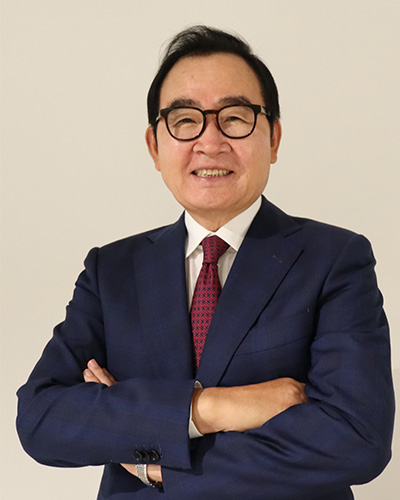
Eunkey Yoon
President of the Korea Collaboration Association
Former Director of the National HRD Institute
Former member of the Presidential Council on Nation Branding
When a business person recently met a foreign buyer during a business trip, what the buyer asked him first was whether he could get BTS concert tickets. The buyer said his daughter was very anxious because she is an Army (BTS fanbase), but she can’t get concert tickets. If the business person could get BTS concert tickets, the buyer said he could focus on favorable results for the business. Even during a senior officials meeting between Korea and the USA, a minister was surprised because a high-ranking official of the USA started a conversation by mentioning BTS rather than policies. It’s a dreamlike happening for the older generation who spent ther school days singing the songs of Beetles or Chanson.
BTS emerged as global pop icons in the 21st century, just in 10 years since their debut in 2013. Hyundai Research Institute published a report stating that BTS generated economic profits of 5 Billion USD (about 5 Trillion 700 Billion KRW) every year as of 2021. The driving force of the Korean wave spreading all over the world was BTS. Those who are attracted by BTS learn Korean, eat Korean food, and visit Korea beyond just purchasing Korean goods. The stronger the brand power of BTS becomes, the higher the national brand value of Korea becomes, as well as city brands, including Seoul and Busan.
The reason why consumers indulge in brands is because they feel a strong attraction. Brand loyalty varies depending on the degree of attraction. Larry Light classified brand loyalty into 4 stages and defined it as a loyalty ladder. The first stage is the category shopper. The category shopper consumes regardless of brand. The second stage is the short list buyer.
The short list buyer selects several brands and consumes one of them. The third sage is brand preference. Brand preference shoppers consumes good from their preferred brands, if the price is the same. Brand enthusiasts love and purchase a specific brand, regardless of the price. Consumer loyalty is strongest when it is at the top of the ladder. Brands with more consumers having higher consumer loyalty mean a more valuable brands. BTS is enjoying the highest brand power because customers with higher consumer loyalty are spread all over the world.
Both cities and nations are facing the brand competition era. Seoul Metropolitan City started a slogan innovation campaign for enhancing its brand values. Seoul Metropolitan City held preference voting on four new slogans selected by collecting experts’ opinions with citizen votes from December 28, 2022 through January 31, 2023: ①Seoul for you ②Amazing Seoul ③Seoul, my soul, and ④Make it happen, Seoul.
Of the four slogans, No. 1 and No. 2 were selected in the preliminary voting. In the final preference survey to select the slogan, ‘Seoul, My Soul’ ranked top. The Seoul Metropolitan Government said the final brand would be announced soon, after design work. The goal of the municipal administration promised by Seoul Mayor was the ‘Attraction of Accompaniment’. The Seoul Mayor aims to realize co-prosperity, as a variety of people advance together and ultimately make the citizens happy and tourists excited by strengthening the attraction of Seoul. The cities whose brands are very popular also ceaselessly endeavor to expand their brand values, including New York, Paris, London, Tokyo, Rome, and Dubai are competing against Seoul in good faith. Those brands are at the top of industry and culture. Higher brand value attracts more people and money.
In accordance with Anholt-lpsos National Brand Index, the national brand ranking of Korea is 23rd, as of 2022. Germany ranked top and Japan ranked second followed by Canada, Italy, and France. Six items were evaluated: ▲exports, ▲ government operation, ▲ cultural heritage ▲national character, ▲ tourism, and ▲ immigration and investment. The national brand ranking of Korea is still low compared to the national economic power of Korea. While the economic power of Korea is close to the Top 10, the national brand is outside the Top 20. Some pointed out that the questions in the survey focused mainly on advanced countries in the West.
Let’s take an example. For the question ‘Do you want to live in that country?’, the citizens in advanced countries in the West may not willingly express positive opinions. There was a national brand committee directly managed by the President during the Lee Myeong-bak’s administration. The committee was based on the reasoning that a higher national brand would increase exports and make Koreans properly treated when visiting other countries. Since it’s difficult for one department in the government to lead national brand policies, it’s meaningful to organize the committee under the direct control by the President. I was also a member of that committee.
While national brand policies were integrated and distributed to each department in the government to some extent, there was a limit in driving the private sectors to follow the policies. It’s because the national brand contains excessively diverse elements and those elements are ever-changing. BTS can’t be created by the government. The public and private sectors recognize the importance of the national brand and collaborate.
Brands of enterprises, goods, and individuals are as important as the national brand. Integration of all brands per field determines the national brand and the national brand achieving a certain level has an influence on brand values per field. It’s an interactive relationship. Human beings emphasize intangible assets more than tangible assets in the Informatization Era. Intangible assets including information, knowledge, patents, technologies, and culture have more values than tangible assets, including land, goods, machinery, and labor. The brand is the most valuable asset integrating all of them.
As the 4th Industrial Revolution enters maturity, intangible assets, including AI, robots, data science, and content become more important. Intangible assets look not with the eyes, but with the mind. Brands have attributes for grasping the mind. Now, we are facing the world where brands dominate everything. From national leaders to entrepreneurs and even to individuals engaged in social activities, everyone needs to recognize the importance of brand values and power and try new challenges.